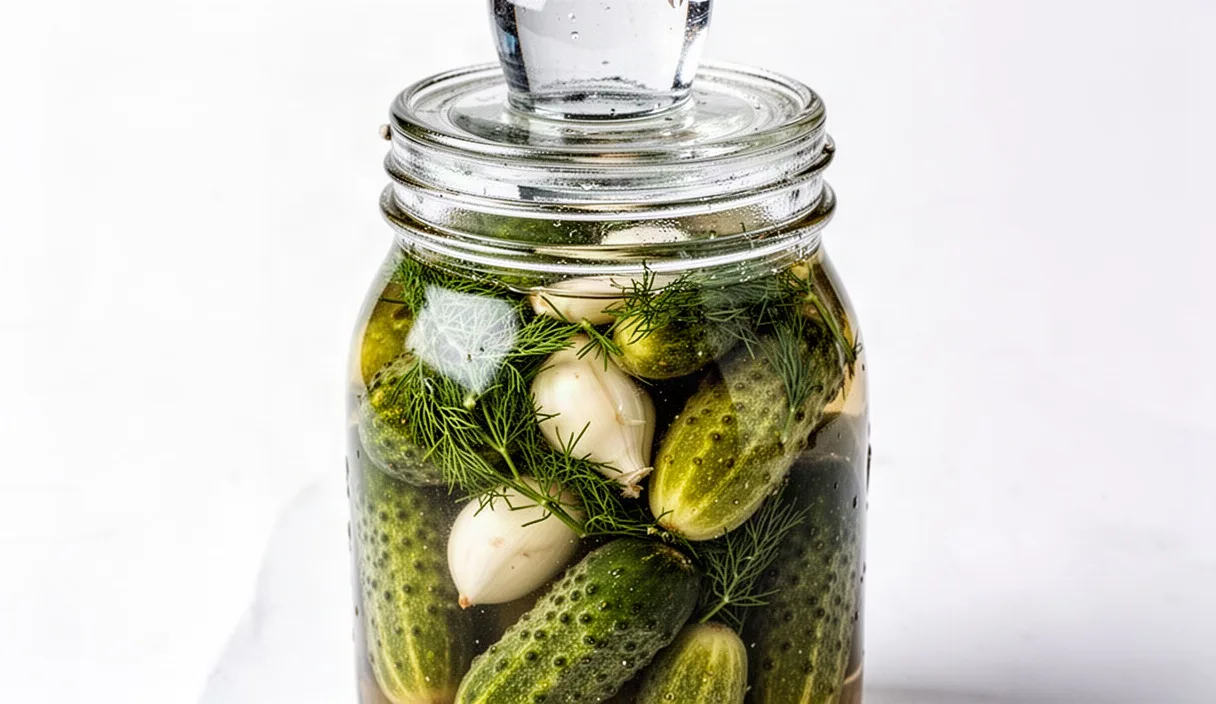
When the morning heat begins to settle over the garden rows, pickling cucumbers demand immediate attention. Their skins feel rough and prickly against our palms, firm to the squeeze and cold from the damp soil. In our pantry, we turn away from the vinegar jug and toward pure salt fermentation. A lacto-fermented cucumber does not rely on acetic acid poured from a bottle. Instead, it creates its own sourness through the quiet work of lactic acid bacteria living on the plant skins, suspended in clean, mineral-rich brine inside a standard glass mason jar.
Working in small batches allows us to handle every fruit individually. A two-quart or half-gallon jar fits easily on a counter, slips into a cellar corner, and cools down quickly once moved to cold storage. Fermenting in glass demands precision of weight, attention to temperature, and respect for plant structure. When we manage the salt ratio and exclude oxygen properly, the cucumbers transform from raw garden produce into olive-green, deeply sour spears that snap cleanly between the teeth.
Calculating the Salt Concentration by Weight
Measuring salt by volume invites failure. A tablespoon of coarse sea salt flakes might weigh twelve grams, whereas the same spoon filled with fine pickling salt can register closer to twenty-one grams. We rely entirely on a digital gram scale. To calculate brine strength accurately, we measure the mass of water we intend to use, then calculate the salt as a direct percentage of that water weight. Some picklers weigh the water and cucumbers combined, but for whole pickling cucumbers packed tightly into quart or half-gallon jars, calculating salt based on water volume provides a dependable, repeatable level of salinity.
For crisp cucumbers, we aim for a salinity between 3.2 percent and 4.2 percent. Anything below 3 percent risks softening the flesh and allows opportunistic molds or pectin-destroying yeasts to compete with the beneficial lactic bacteria. Brines exceeding 5 percent preserve texture remarkably well, but they yield a pickle too salty for everyday eating unless soaked in fresh water before serving. We find that a 3.6 percent brine offers the ideal balance, providing sufficient sodium to suppress pectinase enzymes while letting the sour lactic bite come forward.
| Brine Strength | Grams of Salt per Liter of Water | Grams of Salt per Quart of Water | Primary Application |
|---|---|---|---|
| 2.8 percent | 28 g | 26 g | Quick summer half-sours eaten within three weeks |
| 3.5 percent | 35 g | 33 g | Standard full-sour pickles with moderate storage life |
| 4.2 percent | 42 g | 40 g | Warm-weather ferments and longer cellar preservation |
We dissolve the salt thoroughly into unchlorinated well or spring water before pouring it over the vegetables. Municipal tap water containing residual chlorine or chloramines can inhibit the initial microbial bloom, leading to sluggish fermentation and sluggish acid development. If tap water must be used, boiling it vigorously for fifteen minutes and letting it cool to room temperature, or running it through an active carbon filter, will remove volatile sanitizers.
Preparing Firm Cucumbers and Trimming Blossom Ends
A soft cucumber will never become a crisp pickle. We select small pickling varieties like Kirby, Boston Pickling, or National Pickling, harvested early in the morning while still cool. The fruits should feel dense, with taut, bumpy skins and dark green color. Large, smooth-skinned slicing cucumbers have thick, watery seed cavities and thin flesh walls that turn to mush within forty-eight hours of submersion. We discard any fruit showing yellow bellies, wrinkling stems, or soft indentations.
Cleanliness requires careful handling without bruising the flesh. We soak the freshly picked cucumbers in a basin of cold well water for twenty minutes to loosen stubborn garden silt, then wipe each one gently using a soft linen cloth. Vigorous scrubbing strips away the natural microflora residing in the epidermal folds, which are the very microorganisms needed to ignite fermentation.
The most critical mechanical step takes place with a paring knife. We slice away an eighth of an inch from the blossom end of every cucumber. The blossom end contains an accumulation of endogenous pectinase, a digestive enzyme that breaks down cellular walls as the fruit ripens. If left intact, this enzyme leaches directly into the brine, softening the cucumbers from the inside out regardless of your salt concentration or tannin additions. We inspect both ends carefully: the stem end shows an indented, clean detachment point, while the blossom end displays a small, rough scar.
Using Natural Tannins to Keep Vegetables Crisp
Plant tannins act as natural astringents. In the pickling jar, they bind to proteins and actively neutralize the softening enzymes that cause cucumbers to turn hollow or limp. While vinegar pickling relies on cold temperatures and acidity to preserve firmness, lactic ferments benefit tremendously from the cellular reinforcement that vegetable tannins supply.
We prefer freshly gathered leaves that contain high concentrations of condensed tannins without imparting overpowering flavors. Before packing our cucumbers into the jar, we create a bed of leaves at the bottom, and we slip a few additional leaves along the walls between the fruit spears.
- Grape Leaves: Fresh wild grape or domestic wine grape leaves offer strong enzyme-inhibiting power with a clean, neutral flavor.
- Oak Leaves: Young leaves from white or red oaks provide dense tannins. One or two clean, undamaged leaves per quart are sufficient.
- Horseradish Leaves: These contribute both stabilizing tannins and a subtle, peppery heat that complements the garlic in the brine.
- Organic Black Tea: A half-teaspoon of loose, unflavored black tea leaves tied in cheesecloth works reliably when fresh orchard or garden foliage is unavailable.
- Bay Leaves: Dried or fresh bay laurel leaves offer mild tannins alongside pleasant, resinous aromatics.
We avoid powdered tannin additives meant for winemaking unless no whole botanical sources exist, as excessive tannin extracts can introduce a bitter, drying sensation on the tongue. Two medium oak leaves or three wild grape leaves per two-quart jar will furnish all the structural support the brine requires without altering the crisp, clean finish of the pickle.
Submergence Weights and Air Exclusion
Lacto-fermentation is an anaerobic process. The microorganisms we want to cultivate thrive only in the absence of free oxygen. Any cucumber tissue, dill stem, or garlic clove that breaks the surface of the brine and contacts the ambient air in the jar headspace becomes a landing pad for wild molds and oxidative yeasts. To prevent this, we pack the vegetables tightly beneath the shoulder of the jar and anchor them down.
We place our spices, garlic cloves, coriander seed, and mustard seed at the very bottom of the jar so they cannot float upward. Cucumbers are packed vertically, wedged tightly against one another so they brace each other in position. Once the jar is filled to two inches below the rim, we add a primary barrier, such as a large grape leaf or a trimmed disc of cabbage leaf, folded across the top of the packed spears. This leaf acts as a blanket, trapping loose peppercorns and seeds beneath it.
Directly on top of this plant barrier, we rest a heavy glass fermentation weight. The weight must be heavy enough to press the produce beneath the liquid line, ensuring at least an inch of clear brine sits above the glass disc. If glass weights are not at hand, a food-grade silicone disc or a small water-filled zip-top bag made of polyethylene can serve as an effective substitute. We then seal the jar using a lid fitted with a silicone grommet and a three-piece water airlock, or a two-piece mason jar metal lid left a quarter-turn loose to allow carbon dioxide gas to vent automatically without letting atmospheric oxygen seep inside.
Monitoring Fermentation Day by Day
Once the jar is sealed, we set it on a shallow tray in a dimly lit pantry kept between 64 and 72 degrees Fahrenheit. Temperature dictates the speed and quality of bacterial succession. If the room is too cold, fermentation stalls; if it exceeds 76 degrees, the rate of gas production outpaces acid development, often resulting in hollow centers and softened textures.
- Initial Settling (First Twenty-Four to Forty-Eight Hours): The brine remains mostly clear. Tiny pinprick bubbles of carbon dioxide begin to collect on the bumps of the cucumber skins and rise slowly through the liquid. The aroma smells faintly of fresh dill and raw garden earth.
- Active Turbidity (Days Three to Five): The liquid takes on a milky, cloudy haze as *Leuconostoc mesenteroides* and early lactic cultures multiply. Gas production peaks, and the water level may rise slightly as gas pockets form between the cucumbers. A pale sediment begins to settle on the bottom of the jar and across the tops of the fruit. This sediment is dead bacterial cells, not mold, and is a natural marker of a healthy ferment.
- Acid Maturation (Days Six to Ten): The dominant bacterial species shifts to acid-tolerant *Lactobacillus plantarum*. The bright emerald green of the raw cucumbers fades into a deep, uniform olive tone. The scent shifts distinctly from garden-fresh to pleasantly tart, clean, and sour. We begin tasting the brine with a clean spoon on day six.
During our daily checks, we inspect the surface. If a thin, powdery, translucent film forms on the surface of the brine, it is likely kahm yeast, a harmless surface organism that develops when oxygen levels rise or brine salinity is slightly low. We skim it away cleanly using an unreactive spoon to prevent it from imparting an off-flavor. If fuzzy growth appears in shades of green, black, pink, or pure white, that indicates mold, which requires that the batch be discarded immediately.
Refrigerating to Arrest Sourness at Peak Taste
Lactic acid fermentation does not stop on its own while fermentable sugars remain in the cucumber flesh; it merely slows as the environment becomes increasingly acidic. If left at room temperature for several weeks, the cucumbers will eventually turn aggressively sour, puckering the mouth and softening the outer skins. Cold temperatures effectively arrest this process, slowing the metabolic activity of the bacteria to a near standstill.
We decide when to chill the jar based on the flavor and internal translucency of the cucumber. We retrieve a test pickle using clean wooden tongs, slice off a quarter-inch round, and examine the cross-section. The white, opaque look of raw cucumber flesh should be gone, replaced by a translucent, saturated olive green extending straight to the core. The texture should resist the tooth and yield with a sharp, wet crack.
When this peak is reached, usually between seven and twelve days depending on ambient room warmth, we remove the airlock and glass weight, ensure the brine still covers the remaining pickles, and screw down a standard two-piece metal lid or a plastic storage cap firmly. We transfer the jar directly into a refrigerator maintained below 40 degrees Fahrenheit. Over the next two weeks in cold storage, the harsh raw edges of the lactic acid mellow, allowing the garlic, dill, and coriander oils to permeate the flesh evenly.
Common Mistakes
Even with careful preparation, small oversights in technique can compromise a batch of salt-brine pickles. These are the most frequent points of failure we encounter:
- Using Chlorinated Water: City water treated with chlorine or chloramines suppresses bacterial growth. The cucumbers sit in salty water without fermenting, eventually succumbing to rot instead of acid preservation.
- Selecting Over-Mature Fruit: Cucumbers with broad yellow bellies or developed, hard seeds contain high moisture levels and weak cell walls. They collapse into mushy husks within three days of salting.
- Leaving the Blossom Tip Intact: Skipping the trimming of the blossom scar allows active pectinolytic enzymes to break down the firm plant walls throughout the jar.
- Letting Produce Float: Exposed vegetable bits above the waterline invite mold spores from the air. Every solid item must remain anchored below the brine surface.
- Fermenting in Warm Sunlight: Direct light and temperatures above 75 degrees encourage rapid, chaotic fermentation that causes cucumber centers to turn soft, gassy, and hollow.
- Relying on Volume Measurements: Measuring salt with cups or spoons introduces massive discrepancies due to flake density, leading to unintended under-salting or unpalatable over-salting.
Taking the Next Steps
Once you master the base technique for crisp pickling cucumbers, keep a dedicated notebook on your larder shelf. Note down the harvest date, the exact salinity percentage used, the ambient room temperature during the active cycle, and the day the jar was moved to cold storage. These records will help you dial in the exact sourness and crispness that suits your household palate throughout the changing seasons.
From here, you can apply this identical 3.6 percent brine calculation to other summer produce that demands crispness, such as green tomatoes, wax beans, garlic scapes, and okra. Always observe standard food sanitation practices when preparing jars and utensils. If you ever encounter a jar with foul odors, discoloration that looks slimy, or mold growth that has penetrated beneath the brine, trust your senses and discard the contents. For specific safety guidelines regarding home fermentation and food preservation thresholds, consult your local agricultural extension service.